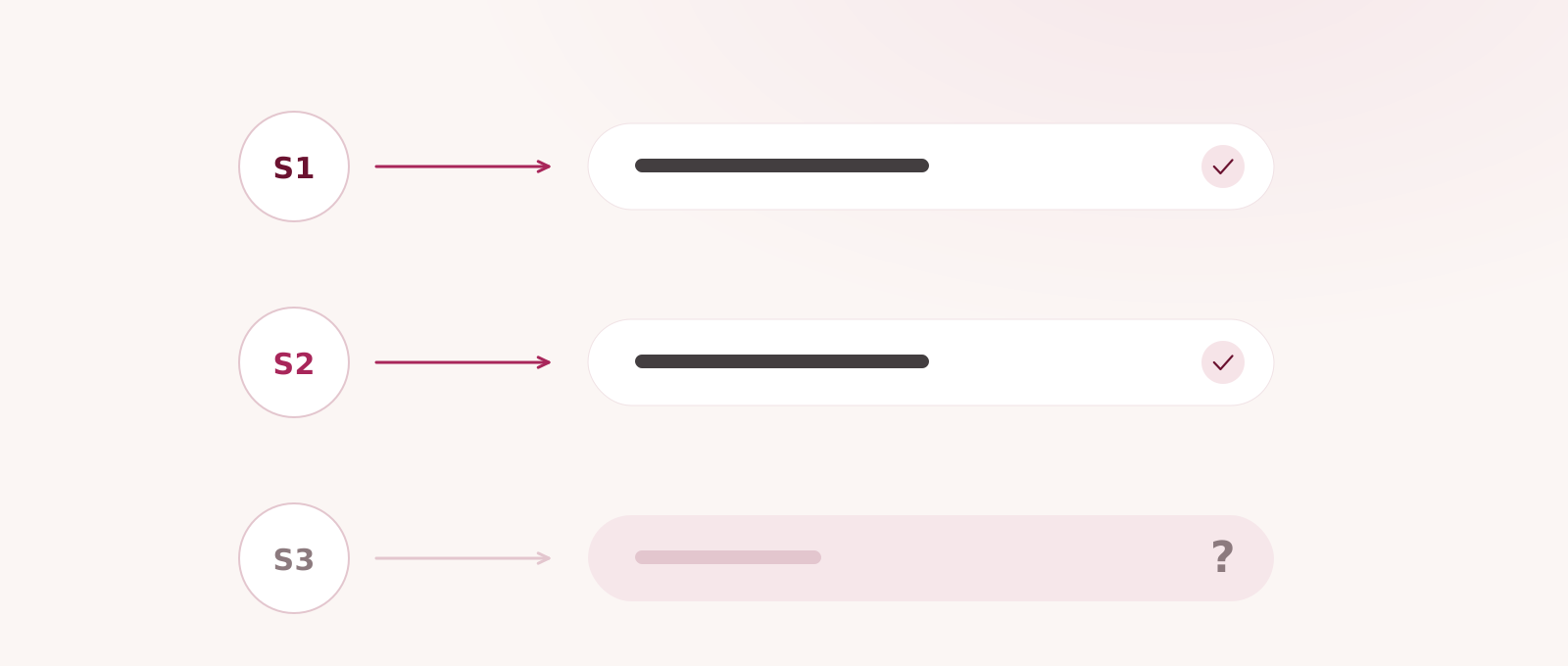
A transcript may separate voices as Speaker 1, Speaker 2, or another neutral label. That structure is useful, but it is not a verified list of people. A label groups speech that the transcription process associates with a voice; a name is an identity claim that needs evidence. Treating the two as interchangeable can put the right words under the wrong person. A careful workflow keeps labels neutral until a reviewer can support the mapping, checks difficult turn changes against the recording, and leaves unresolved identities visibly unresolved.
Understand what a speaker label does and does not say
A speaker label helps organise a conversation into turns. It lets a reader follow changes in voice without presenting every paragraph as an undifferentiated block. That is the useful part. The label does not, by itself, establish a legal name, job title, meeting role, or relationship to the other participants. Even a consistent label should be read as a transcript marker rather than proof of identity.
VoiceCut does not currently classify the voices in a conversation as questioner and respondent, interviewer and guest, or any other question-and-answer roles. Those roles may be clear from the exchange, but a reviewer must establish them from the recording and reliable context. Do not turn a numbered label into a role simply because one person asks more questions.
The current web Studio also does not let you replace a neutral label with a person’s name across the transcript. Plan for that boundary. Keep a verified label-to-name map in your review notes or downstream document, rather than describing the web transcript as if the names had been changed inside VoiceCut.
- Read labels as navigation aids, not confirmed identities.
- Keep names, roles, and organisations as separate facts to verify.
- Use a neutral label whenever the evidence is incomplete or contradictory.
Prepare a label-to-name map before making corrections
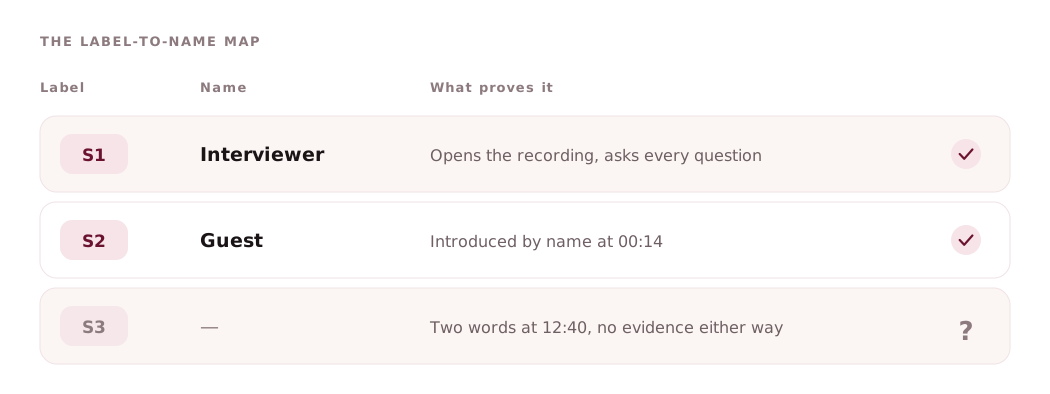
Start with the unedited transcript, the original recording, and the context you are allowed to use: a meeting invitation, interview brief, participant list, call notes, or another trusted record. Create a small table with one row per transcript label. Give it fields for the proposed name, confidence or status, supporting source, the first useful timestamp, and any conflicting evidence.
Use clear statuses such as confirmed, probable, and unresolved. Confirmed should mean that the mapping is supported by something more reliable than voice familiarity alone. Probable can help a reviewer work efficiently, but it should never silently become final. Unresolved is a valid result, especially when several people sound similar, a participant joins late, or the recording lacks introductions.
Preserve the original label in the map even after you confirm a name. That makes later checks possible: another reviewer can see which transcript turns were associated with the decision and can return to the source if a discrepancy appears. A replacement that erases the original marker makes the review harder to audit.
- Record the exact source used to support each name.
- Add a timestamp where the person introduces themselves or is clearly addressed.
- Write down conflicts instead of choosing the most convenient identity.
Confirm identities from evidence, not from expectations
Begin with explicit evidence in the audio. A self-introduction can support a name when the voice continues into the labelled turns. A direct address can help when the reply makes the target clear. References to a person’s work or role may support the mapping, but they are weaker when several participants share that context. Listen before and after the key moment rather than relying on one isolated line.
Then compare the audio with trusted external context. Check the participant list, agenda, interview schedule, or notes made by someone who attended. Be cautious with screen names, forwarded invitations, and expected attendance: a listed person may not speak, and an unlisted person may join. The purpose of the context is to corroborate the recording, not override it.
Avoid identifying someone from accent, gender presentation, age, speaking style, or a familiar-sounding voice. Those impressions are neither a reliable name source nor a fair basis for attribution. If the recording and records do not support a firm answer, retain the neutral label and ask a participant or meeting owner who can confirm it.
- Prefer explicit introductions and clearly attributable direct addresses.
- Use attendance records as corroboration rather than automatic proof.
- Escalate consequential uncertainty to a person who was present.
Review speaker changes manually around difficult passages
Speaker separation deserves its own pass after the words have been reviewed. VoiceCut does not create a dedicated review list for every possible speaker-change problem. Move through the transcript while listening to the recording, with extra attention to short replies, interruptions, overlapping speech, rapid back-and-forth exchanges, and passages where a person quotes someone else.
At each suspicious transition, listen to enough audio on both sides to hear the turn develop. Ask whether the label changes too early, too late, or not at all. A short yes, a laugh, or a name spoken during overlap can be easy to attach to the neighbouring turn. Do not infer the owner of a sentence solely from where a paragraph begins on the page.
Prioritise passages where attribution changes meaning: commitments, denials, approvals, objections, quotations, dates, amounts, and statements intended for publication. If the audio cannot resolve the overlap, mark the attribution as uncertain in your working document. A visible limitation is safer than a polished but unsupported name.
- Check short interjections and overlap separately from long, clear turns.
- Listen across the boundary instead of sampling only the disputed sentence.
- Give consequential statements a second review when attribution remains doubtful.
Correct wording and attribution without rewriting the source
Separate two kinds of correction. A wording correction asks what was said. An attribution correction asks who said it. Resolve and record them independently so a clean sentence does not make an uncertain identity look settled. When the transcript text is wrong, compare it with the recording and make the smallest correction that the audio supports. Keep names in the external mapping until your publishing or document workflow applies them.
For a downstream interview, article, set of minutes, or research note, apply only confirmed mappings. On first reference, use the form required by your editorial rules; after that, a surname, first name, or role may be enough. If a role is more relevant than a personal name, verify the role separately. Someone being labelled consistently does not prove that they are the chair, customer, expert, or decision-maker.
Keep a correction log for high-stakes work. Record the label, timestamp, original attribution, revised attribution, evidence, reviewer, and date. If a participant later corrects the record, update the downstream document and note why. The goal is not to preserve every draft forever, but to make material identity decisions understandable.
- Do not use improved wording as evidence for a speaker’s identity.
- Apply only confirmed names to quotations and commitments.
- Retain a short audit note for corrections that affect meaning or accountability.
Run a final attribution check before sharing
Read the finished document by person rather than only from top to bottom. Collect every quotation, decision, and action attributed to each named participant, then ask whether the voice, context, and label map support the full set. This catches a common review gap: each line may look plausible on its own while two different voices have been merged under one name.
Spot-check the opening introductions, the first turn for every label, every return after a long silence, and the most important claims. Confirm spelling and preferred form of names from a reliable source. If consent, privacy, or publication rules limit whether a person should be named, follow those rules even when the identity is known.
Finish with an explicit unresolved list. It may contain a neutral label, a disputed turn, or a passage where overlap prevents confident attribution. Share that limitation with whoever approves the document. A transcript with one honest unknown is more useful than a record that assigns certainty where the source does not.
- Review all statements grouped under each final name.
- Check name spelling, role, and permission to identify the person separately.
- Carry unresolved labels forward clearly instead of guessing at publication time.
Review speaker labels in your VoiceCut transcript
New accounts receive 30 trial minutes. No payment card is required.