
A one-time minute pack and an unlimited subscription solve different planning problems. A pack gives you a defined balance without a recurring VoiceCut fee, while an unlimited offer elsewhere may make more sense when heavy transcription continues month after month. The right choice depends less on the word unlimited than on your actual recording pattern, the provider’s terms, and how carefully you estimate billable time. This guide uses VoiceCut’s current catalogue and explains what to compare without inventing a universal winner.
Start with the two different payment models
VoiceCut sells transcription minutes as one-time purchases. It does not currently sell a recurring transcription subscription. You choose a fixed quantity, pay once, and draw down that balance as recordings are processed. Purchased minutes do not expire, so a quiet month does not remove the paid balance merely because the calendar changed.
An unlimited transcription service usually uses a recurring subscription model, but the word alone does not tell you the full contract. A provider may define limits around file length, monthly processing, concurrency, storage, exports, fair use, or account sharing. Read the current terms of any service you consider. This guide does not assume that every unlimited offer works the same way.
The practical distinction is commitment. A VoiceCut pack commits money to a known number of started minutes without an ongoing subscription. An unlimited plan commits you to a recurring period in return for the usage allowed by its rules. Either can be rational; the better model is the one that matches your real demand and required workflow.
- Choose by expected use, not by the most attractive label.
- Separate the payment model from features, storage, and service limits.
- Check current terms before relying on any provider’s use of unlimited.
Read the current VoiceCut minute catalogue precisely
VoiceCut currently offers three one-time purchases in euros: €9 for 120 minutes, €29 for 600 minutes, and €79 for 2,000 minutes. These are purchased-minute balances, not monthly allowances. The paid minutes do not expire, and buying a pack does not start a repeating subscription charge.
New trial credit follows a different rule. VoiceCut provides 30 trial minutes, and those trial minutes expire after 30 days. Do not plan a future project on the assumption that unused trial credit will remain available indefinitely. Purchased credit and trial credit should be treated as separate balances with separate expiry behaviour.
Pick a pack only after estimating the amount you are likely to process. The smallest pack may fit an occasional interview or a short batch of calls; a larger balance may fit an established archive or recurring work that remains below your threshold for a monthly service. Those are planning patterns, not promises about how many files any pack will cover. Recording length determines usage.
- €9 buys 120 purchased minutes.
- €29 buys 600 purchased minutes.
- €79 buys 2,000 purchased minutes.
- The 30 trial minutes expire after 30 days; purchased minutes do not expire.
Estimate usage by each started minute
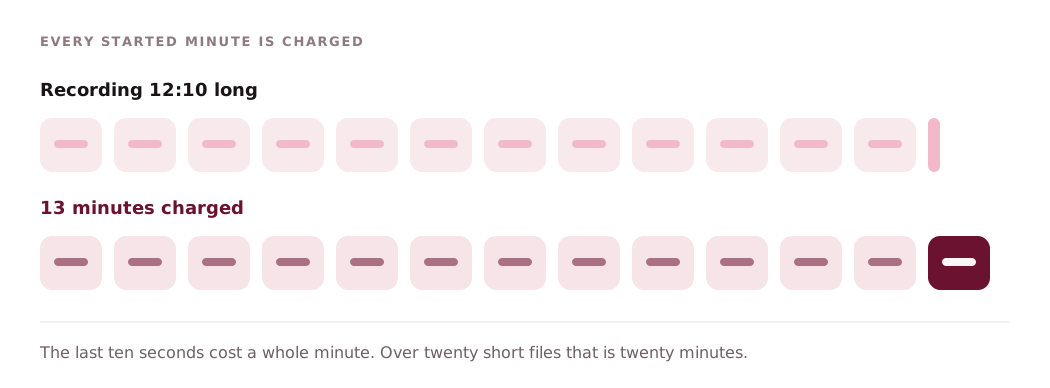
VoiceCut charges usage per started minute. When a recording continues into a new minute, that started minute counts even if only part of it contains audio. Plan from the billable duration of each recording rather than assuming that spare seconds from separate files will always combine into another full minute.
For a hypothetical estimate, imagine a recording that ends a few seconds after a minute boundary. Count the newly started minute in your budget. Apply the same rule to every file in the batch, then add a margin for recordings you may need to process later. This example illustrates the counting method; it is not a claim about a typical VoiceCut customer or project.
Clean the input list before purchasing. Remove accidental duplicates, test clips you do not need, and files outside the review scope. Confirm which language, output, and retention workflow you need separately. Minute quantity answers how much audio can be processed; it does not decide whether a particular workflow or export meets your requirements.
- Round planning up whenever a recording enters another minute.
- Estimate every file, then total the started-minute amounts.
- Keep a reserve for late additions, replacements, or scope changes.
Match a minute pack to irregular or project-based work
A non-expiring purchased balance can suit work that arrives in bursts. You might transcribe a research round, a set of interviews, a training archive, or several meetings, then have little activity for a while. Because the paid minutes do not expire, the remaining balance can wait for the next approved recording instead of resetting at the end of a billing month.
A pack can also make internal approval simpler when a project owner needs a known one-time purchase rather than another subscription. That does not make the pack automatically cheaper. Compare the amount you expect to use, how soon you will use it, and any operational requirements before deciding. A balance that sits unused still represents money already spent.
Revisit the estimate when the project changes. More participants do not directly add minutes to one recording, but extra sessions, retakes, or longer discussions do. Keep a small ledger of uploaded recording duration and charged started minutes so the team can see when another purchase may be needed.
- Consider a pack when demand is occasional, seasonal, or tied to a defined project.
- Use the non-expiring balance as flexibility, not as a reason to overbuy.
- Track actual consumption so the next purchase reflects evidence.
Admit when an unlimited subscription may fit better
If your team processes a consistently heavy volume every month, an unlimited subscription from another provider may be the more suitable model. Regular high demand can make recurring access easier to plan than repeated packs, provided the service’s real limits, quality controls, security terms, and workflow meet your needs. VoiceCut’s lack of a subscription is not an advantage for every buyer.
Test the word unlimited against your workload. Ask whether there are caps on individual recordings, throttling after a threshold, fair-use restrictions, queues, seat limits, or separate charges for required exports. Also check cancellation, renewal, data retention, supported languages, and the review tools your team needs. Do not compare a bare subscription headline with a VoiceCut minute balance while ignoring the rest of the product.
Heavy volume alone is not the only factor. A team may value non-expiring credit because work pauses unpredictably, or prefer a subscription because budgeting needs a stable recurring category. Privacy review, procurement rules, and the effort required to move between tools can outweigh a small difference in headline cost. Document the criteria before selecting either model.
- Give unlimited plans serious consideration for sustained high monthly use.
- Verify restrictions and required features in the provider’s current terms.
- Include workflow, security, and switching effort in the decision.
Make a decision you can review after real usage
Build a short decision sheet with expected started minutes, the timing of the work, the VoiceCut pack you would need, and the recurring offer you are considering. Note all assumptions, including file count, approximate duration, extra sessions, and who needs access. Keep trial credit separate, because its 30-day expiry makes it unsuitable as a permanent reserve.
Choose a one-time VoiceCut pack when the defined balance and non-expiring purchased minutes fit the pattern. Choose an unlimited subscription elsewhere when sustained monthly volume and acceptable terms make recurring access more practical. If the evidence is mixed, start with the smallest commitment that can complete a genuine piece of work, then review actual usage rather than extrapolating from a marketing label.
After the project or billing period, compare your estimate with what happened. Record processed minutes, unused balance, periods of inactivity, and any provider restrictions that affected the workflow. The next decision should use that evidence. Pricing and product terms can change, so confirm the current catalogue and contract again before a later purchase.
- Write down assumptions before choosing a payment model.
- Keep trial expiry and purchased-credit rules distinct.
- Review actual usage before repeating or changing the purchase.
Compare VoiceCut minute packs for your next project
New accounts receive 30 trial minutes. No payment card is required.