A transcript makes an interview searchable, but it does not replace the source recording or the reporting behind a story. Recognition errors, overlapping speech, unfamiliar names, and missing context can all distort a publishable line. A dependable workflow separates transcription review from fact-checking: first establish what was said and who said it, then test factual claims against appropriate sources. The checklist below keeps those two jobs connected without pretending they are the same.
Define the publication risk and source hierarchy
Before editing, list how the transcript will be used. A private research note, a background briefing, a direct quotation, and a legally sensitive allegation carry different consequences. Mark the passages that could affect a person’s reputation, safety, employment, finances, or legal position. These need the strongest source check and a clear editorial decision.
Establish a source hierarchy for the assignment. The original audio or video establishes what is audible. Contemporary documents can confirm spellings, dates, figures, and formal positions. The transcript is a navigational and editorial aid, not independent confirmation that the speaker’s factual claim is true. A later recollection may clarify meaning, but it should not silently overwrite the original record.
Preserve the source file before making edits. Keep its original filename, acquisition date, and any consent or usage notes with the assignment record. Work on a copy of the transcript, and record substantial corrections so another editor can understand what changed and why.
- Identify direct quotes, allegations, numbers, names, and disputed events.
- Record which source can establish wording, identity, and factual support.
- Escalate high-consequence passages under your newsroom’s editorial policy.
Build a manual verification ledger
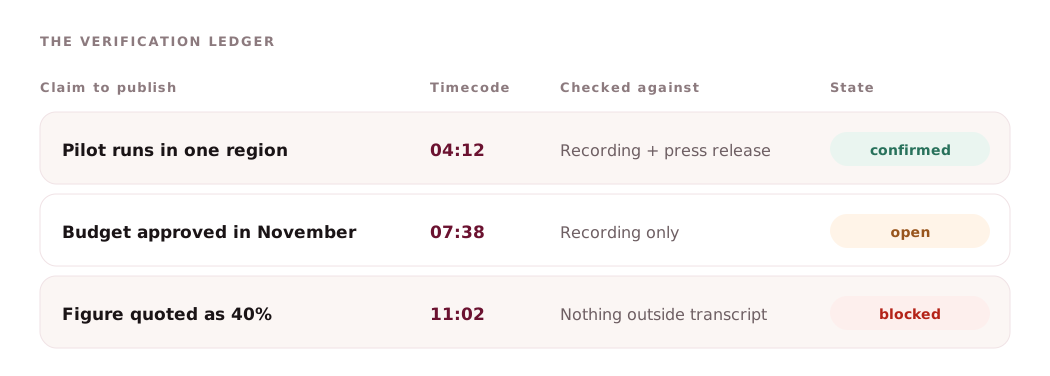
Create a simple ledger before the detailed review. One row can hold the passage, transcript timestamp, proposed use, source needed, current status, and reviewer. This is a manual editorial list, not a guarantee that every risk has been detected. Add items as the reporting develops and keep unresolved questions visible.
Use plain statuses such as unchecked, source located, wording confirmed, fact checked, disputed, and do not publish. Separate wording confirmed from fact checked. The recording may establish that a source said a number, while an official filing or another primary document may show that the number itself is wrong.
Prioritise the ledger by consequence rather than by transcript order. Verify the headline claim, sensitive attribution, and publishable quotes before polishing routine passages. If time runs short, editors can then see exactly what remains unverified instead of inheriting a clean-looking transcript with hidden gaps.
- Give every publishable quote a timestamp or short time range.
- Name the person responsible for each unresolved source check.
- Keep editorial exclusions and unresolved disputes in the handoff.
Verify names, voices, and attribution
Start with identity. VoiceCut can show changing speaker labels in a transcript, but those labels distinguish voices; they do not by themselves prove a person’s name. Check introductions in the recording, booking correspondence, a trusted participant list, official biographies, and the reporter’s notes. For a remote interview, confirm whether an assistant, interpreter, or another participant joined unexpectedly.
Listen around each speaker change, especially where people interrupt or finish one another’s sentences. An attribution error often begins one segment earlier than the quote that draws attention. If the source cannot be established confidently, retain a neutral speaker label in the working transcript and keep the quotation out of publication until an editor resolves it.
Check the spelling and role used at the time of publication. Organisations, job titles, place names, and transliterations can change. Prefer an authoritative current source, but note when the wording in the interview reflects an earlier role or historical context. Do not infer personal characteristics from a voice.
- Confirm full name, spelling, role, and organisation independently.
- Check every attributed quote after interruptions or overlapping speech.
- Use a neutral label when identity remains unresolved.
Check quotations against sound and context
For every direct quote, listen from before the sentence begins until after the thought ends. Confirm the exact words, negation, tense, numbers, and references such as he, they, or that project. Tone can distinguish a serious statement from quotation, irony, or a question, although ambiguous tone should be described cautiously rather than treated as certainty.
Edit spoken language only under your publication’s quotation policy. Removing a filler or false start may improve readability, but it must not make the speaker sound more definite, fluent, or categorical than the recording. Never place a paraphrase inside quotation marks. If an ellipsis removes a qualification or changes who the sentence refers to, the shortened quote is not safe to use.
Check the question as well as the answer. A clipped response can mislead when the preceding question contained the key assumption. For contentious material, record the useful start and end timestamps, not just the first segment. Ask a second editor to listen when noise, accent, crosstalk, or an unfamiliar term leaves more than one plausible reading.
- Confirm wording, attribution, and surrounding context as separate checks.
- Preserve meaningful hedges, conditions, and uncertainty.
- Mark inaudible language honestly instead of completing it from expectation.
Test figures, dates, and factual claims outside the transcript
After wording is confirmed, fact-check the claims you may publish. Match dates and quantities to primary documents where possible: filings, reports, court records, data releases, contracts, calendars, or on-record statements from the responsible body. The appropriate source depends on the claim. A search result or repeated secondary report may help locate a document, but repetition is not confirmation.
Break compound claims into parts. A source may be correct about an event but wrong about its date, scale, or cause. Record which element each source supports. When sources conflict, preserve the conflict in the ledger and seek resolution; do not choose the version that fits the cleanest narrative.
Watch units, currencies, time zones, percentages, and comparisons. Check whether a figure is preliminary or final, gross or net, annual or monthly. Verify that relative dates such as next Friday are converted using the interview date and location. If a claim cannot be confirmed, attribute it clearly, add appropriate context, or remove it under editorial policy.
- Use the strongest available source for each individual claim.
- Record document title, date, location, and the detail it supports.
- Return unresolved contradictions to the assigning editor.
Run the publication gate and preserve the audit trail
Before handoff, read only the material planned for publication while the recording and ledger remain open. Confirm each quote, attribution, name, date, and figure. Check that the story does not present a reported allegation as an established fact or remove a response that is necessary for fairness. Apply your newsroom’s legal, safeguarding, and right-of-reply processes where relevant.
Give the editor the reviewed transcript, the source recording reference, and the verification ledger. Highlight every open issue in the handoff message. A status such as wording confirmed does not imply that the underlying claim passed a fact check, so keep those fields separate through final copy editing.
If you export from VoiceCut, open the file and spot-check several timestamps, labels, and critical lines against Studio and the recording. Preserve the final published wording, correction notes, source documents, and approval history under your retention policy. If new information changes the story later, that record makes a transparent correction possible.
- Require a human editor to clear all high-consequence items.
- State unresolved limitations plainly in the editorial handoff.
- Keep enough source context to review or correct the published wording later.
Prepare an interview transcript in VoiceCut
New accounts receive 30 trial minutes. No payment card is required.